
Exam Access Arrangements ensure that every learner at Carlisle College can take their exams in a fair and supportive way. They are adjustments put in place for students who have a learning difficulty, disability, medical condition, or mental health need that affects how they work under exam conditions. These arrangements do not change the difficulty of the exam or give an unfair advantage - they simply remove barriers so learners can show their true ability.

Exam Access Arrangements
A key part of this process is understanding each learner’s normal way of working. This means looking at the support a student uses every day in lessons, such as using a laptop, taking rest breaks, or using extra time. Exam boards require that exam arrangements reflect what a learner already needs and uses in class, not something introduced only for the exam. By matching support in exams to the learner’s usual working style, we create a familiar, comfortable environment that allows them to perform at their best.
Information for Parents
FAQs

What information do I need to bring from school?
Parents should bring any documents that show the support their child received in school, as this helps the college confirm their normal way of working and ensures exam arrangements can be put in place without delay. The most useful items include:
- Form 8 - This is used when a learner had exam arrangements because of a learning difficulty such as dyslexia or slow processing. It contains assessment scores and recommendations from a qualified assessor. If your child had a Form 8 at school, please bring a copy.
- Form 9 - This records the support a learner used regularly in lessons, such as using a laptop, taking rest breaks, or coloured overlays. It shows the learner’s normal way of working. If the school completed a Form 9, please bring it with you.
- Medical evidence - If your young person’s support relates to a medical or mental health condition, please bring any letters or reports from a GP, consultant, CAMHS, or other health professional. This helps us understand the nature of the condition and why adjustments such as rest breaks or seating near the toilet may be needed. Bringing this information to the Learning Support Department allows the team to review evidence early, confirm the correct arrangements, and avoid delays later in the year.
- Medical device - Some students may need to use a medical device during examinations due to an ongoing medical condition. Examples of medical devices include (but are not limited to) blood glucose monitors, insulin pumps, heart monitors, and other clinically prescribed equipment. To support any application for the use of a medical device in exams, the school must have current medical evidence confirming the diagnosed medical condition.
For more information on what evidence is needed please click the button below.
EAA Information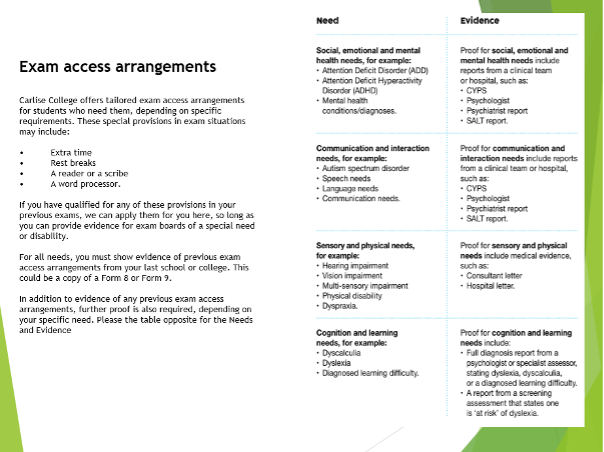
Information for Students
FAQs