

The visit gave pupils the opportunity to explore Engineering, Motor Vehicle and Science, meet college students and staff, and connect their racing projects with practical activities in the college’s workshops and classrooms.
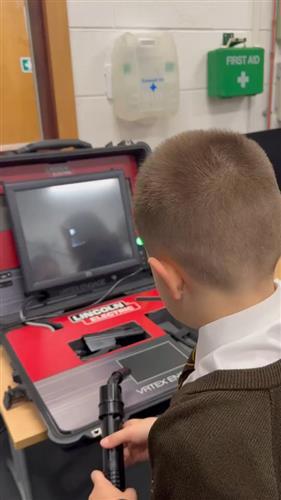
In Engineering, pupils toured the workshop and learned about the different tools and equipment used by students. They also had the chance to try the virtual welding machine and a remote-controlled robot, which they thoroughly enjoyed.
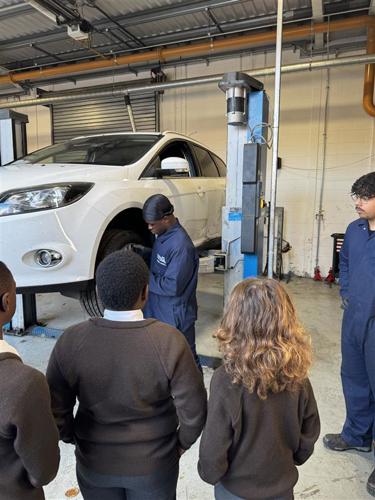
Motor Vehicle students led a tour of their workshop, explaining vehicle maintenance and what it is like to learn in a real working environment. They introduced pupils to car components they could relate to their STEM Racing projects.
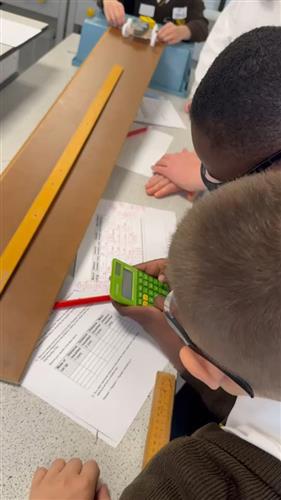
The group also joined T Level Science, where student Lewis Davies, and his classmates hosted a physics activity designed around their racing challenge. Lewis, who is applying to study Physics at University next year, took on project lead for the session, planning an investigation into how the mass of a model car affected its movement, giving pupils a chance to test ideas relevant to building their own cars.
Before the visit, the Science students tested the activity together to check how it worked. Lewis then co-ordinated the session, sharing out tasks with his peers, such as preparing and presenting slides and testing the cars. Classmates also helped adapt the materials for the younger audience, with Lewis drawing on the different skills within their group.
Reflecting on the workshop, Lewis highlighted the support of his classmates and how well they had worked together. He was also really pleased that the pupils enjoyed the activity and were keen to participate.
Simon Ross, Principal of Carlisle College, said: “We were delighted to welcome pupils from Norman Street Primary School and support their STEM Racing (F1 in Schools) projects through a hands-on workshop. The visit gave them the chance to explore real working environments, ask questions and learn alongside our students. It was also a valuable opportunity for our students to share their knowledge and experiences, while developing their own skills by planning and delivering engaging activities for younger learners.”